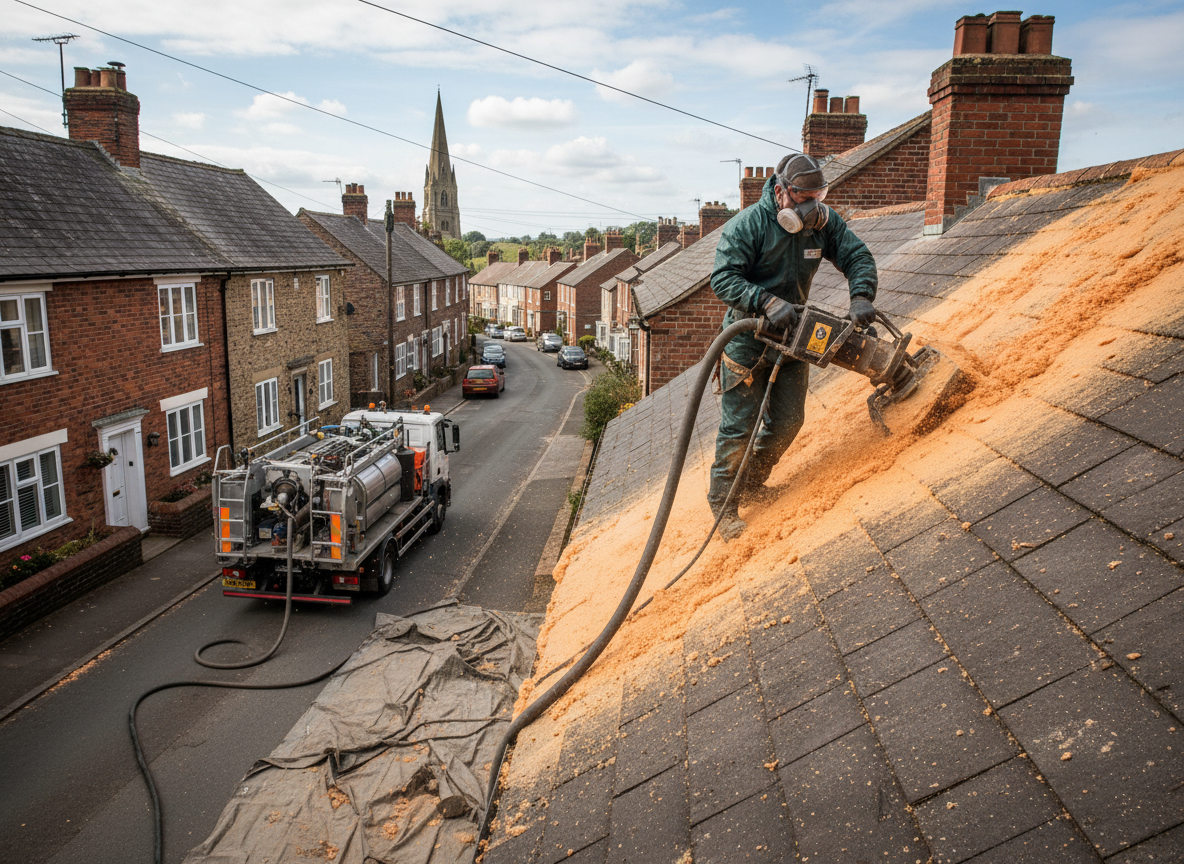
Barnstaple’s older terraced and stone-built homes often received spray foam insulation on pitched slate roofs during earlier energy upgrades. Over time this traps moisture against timbers, especially in the damp North Devon climate where rainfall is frequent and roofs stay wet for long periods. Removing the foam requires careful mechanical and solvent methods to avoid damaging original laths or allowing water ingress during the work.
Many properties around the town centre and Ladywell area have limited loft access and shared rooflines with neighbouring houses. This means extraction teams must work section by section, protecting ceilings below and managing debris that can otherwise fall into gutters or downpipes. Local wind patterns along the Taw valley also make temporary weatherproofing essential once the foam layer is opened.
After removal, ventilation must be restored to Building Regulation standards so that condensation does not reappear. In Barnstaple homes this frequently involves fitting additional ridge vents or eaves baffles suited to the steep pitches common on Victorian and Edwardian stock. Homeowners are advised to inspect for any timber staining before re-insulating with a breathable alternative.
Seasonal Timing Considerations
Work is best scheduled outside the heaviest winter rain periods to reduce the risk of water entering the property mid-job. Spring and early autumn offer more stable conditions for thorough drying of the roof void before any new insulation is considered.
Technician insight
In Barnstaple the thing that catches most people out with roof spray foam removal is how quickly rain gets under the slates once the foam is disturbed; older properties along the Taw often have uneven battens that let water track straight into bedrooms if temporary covering isn’t fitted the same day.
Ladywell Terrace Roof
Homeowner in a 1920s terrace near our Ladywell base reported musty smells in the loft. Inspection showed spray foam trapping moisture against rafters. We removed the foam in sections, dried the timbers and fitted new ridge ventilation. The roof now breathes properly with no further damp issues.
How it works
- 1
Initial Roof Inspection
Assess foam depth, roof structure condition and access points from the Barnstaple property.
- 2
Protection and Containment
Set up internal dust sheets and external debris netting to safeguard ceilings and neighbouring roofs.
- 3
Foam Extraction
Use mechanical scraping and approved solvents to remove foam without damaging original timbers or slates.
- 4
Ventilation Restoration
Install appropriate vents and check for hidden damp before handing back the roof space.
Pricing
Cost varies with roof size, foam thickness and access difficulty; quotes provided after inspection.