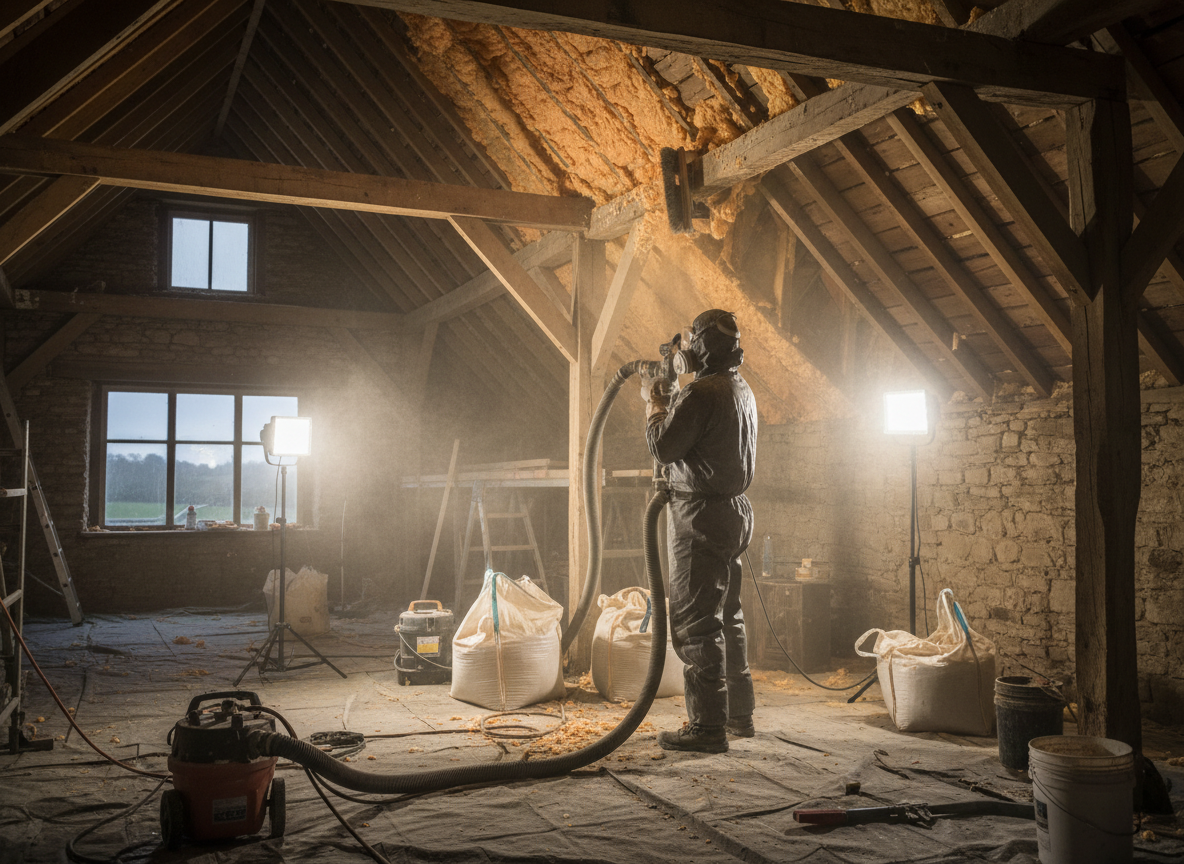
Barnstaple properties often feature Victorian terraces and older stone builds around Ladywell where spray foam was applied directly to roof timbers. Over time the region's frequent rainfall allows moisture to become trapped behind the foam, accelerating rot in rafters and battens that homeowners only discover when stains appear on ceilings. Removal requires careful section-by-section cutting to avoid disturbing hidden decay while protecting original lath and plaster ceilings below.
The work starts with full containment sheeting to keep dust from spreading through the house. Technicians cut the foam into manageable blocks using oscillating tools rather than heat methods that can release fumes in confined lofts common to EX31 postcodes. Once cleared, the roof void is left ventilated overnight where possible so any residual damp can escape before new insulation is considered.
Local planning rules in Barnstaple require waste foam to be taken to licensed disposal sites rather than general landfill. Homeowners are advised to check for asbestos in older insulating boards before any cutting begins, as many Ladywell terraces still contain it in ceiling voids. Skipping this step risks contamination that turns a straightforward removal into a much larger remediation project.
Handling Hidden Timber Decay
In Barnstaple the combination of solid stone walls and pitched roofs means spray foam often conceals wet rot that only becomes visible during removal. Checking rafter ends and wall plates with a moisture meter before work finishes prevents callbacks when new insulation is installed.
Technician insight
In Barnstaple the thing that catches most people out with 24/7 Spray Foam Removal is how quickly damp from the Taw valley works behind foam in pre-1930 terraces around Ladywell, rotting rafter ends that only show once the foam is stripped away.
Ceiling stain callout near the square
A homeowner in central Barnstaple reported water marks after winter storms. Inspection showed spray foam had sealed moisture against the ridge board. We removed the foam in controlled sections, dried the timber, and left the void open for airflow. The ceiling stayed dry through the next heavy rain.
How it works
- 1
Initial Assessment
Inspect the property at any hour to map foam coverage and check for damp or asbestos risks in Barnstaple lofts.
- 2
Site Protection
Lay floor-to-ceiling sheeting and seal doorways to contain dust throughout the removal.
- 3
Foam Extraction
Cut and remove foam in sections, bagging waste immediately for licensed disposal.
- 4
Final Clearance
Vacuum residues, ventilate the void, and advise on next steps for the roof space.
Pricing
Cost depends on loft size, foam depth, and any timber repairs needed; call for a same-day visit from Ladywell.