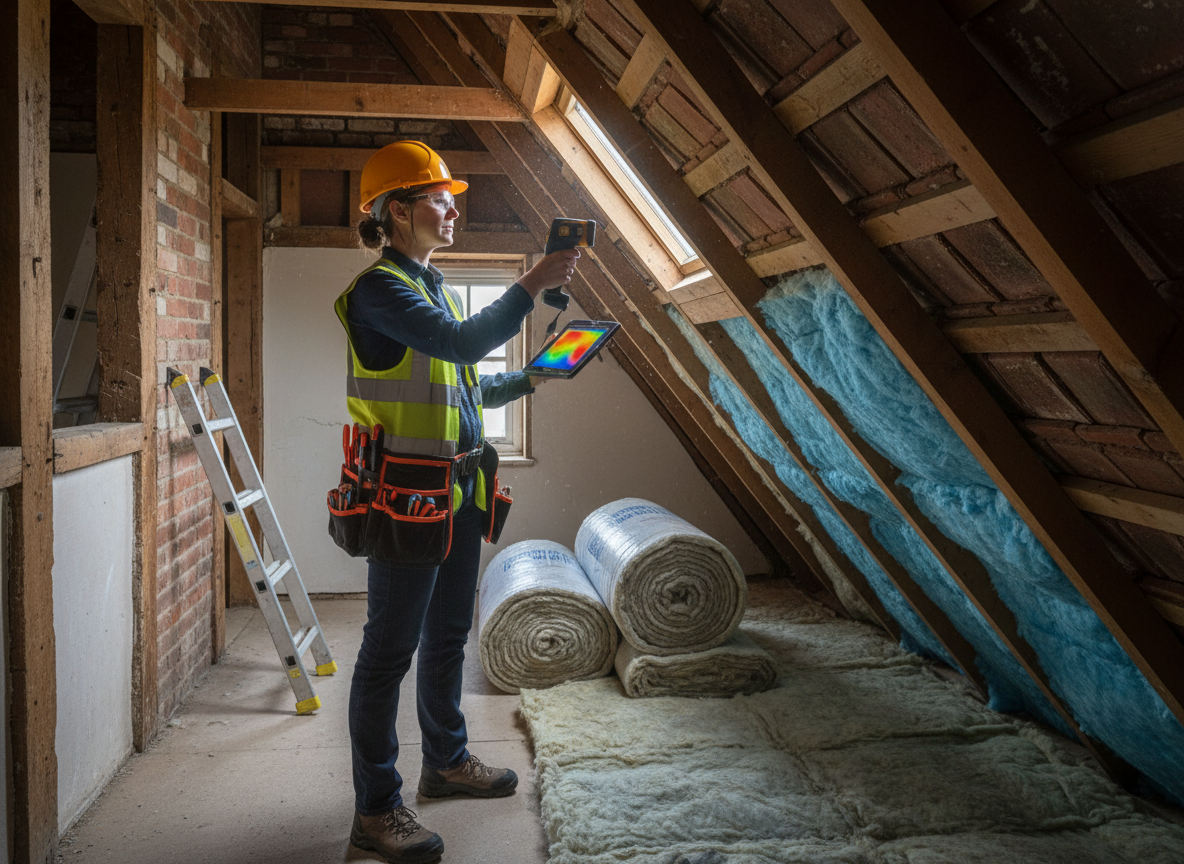
Barnstaple’s Victorian terraces and Edwardian stone cottages often feature narrow roof voids and original slate finishes that respond poorly to closed-cell spray foam. An insulation assessment begins with a full loft survey to check for trapped moisture between the foam and timber sarking, a common issue once winter rainfall increases and humidity lingers in the North Devon climate. We also inspect for thermal bridging at party walls and chimney breasts, which can accelerate condensation once temperatures drop.
Older properties around Pilton and Newport frequently show signs of previous roof leaks that spray foam has concealed rather than cured. During assessment we use moisture meters and borescopes to map hidden damp patches without disturbing the existing insulation. This reveals whether the foam has bonded to saturated rafters, a situation that demands removal before further rot develops in the mild but persistently wet coastal conditions.
Assessment also covers ventilation paths blocked by foam at eaves and ridge levels, a frequent finding in Barnstaple’s compact terraced stock. We note any interaction with existing mineral wool or sheep’s wool layers still present in some lofts, as mixed systems can create uneven performance and hidden mould growth once external temperatures fluctuate.
Technician insight
In Barnstaple the thing that catches most people out with insulation assessment is how quickly spray foam hides leaks in the older slate roofs around the Taw estuary; once the foam is down you lose the early warning drips that used to show on the rafters every winter.
Pilton Terrace Loft Check
A 1920s terraced house in Pilton showed persistent musty smells. Assessment found closed-cell foam bonded over a previous roof leak that had saturated the sarking felt. We mapped the damp timber, advised on removal sequencing and left the owner with a clear plan before any further damage spread to the ceiling joists.
How it works
- 1
Site Inspection
Access the loft and examine all roof timbers, insulation interfaces and ventilation routes in the Barnstaple property.
- 2
Moisture and Thermal Testing
Use meters and imaging to locate trapped damp and cold spots caused by spray foam in older Devon construction.
- 3
Risk Report
Document findings with photos and recommendations tailored to the building’s age and local weather exposure.
- 4
Removal Advice
Outline safe removal options if the assessment identifies moisture damage or blocked ventilation requiring action.
Pricing
Assessments are quoted upfront after a phone description of the property; no obligation to proceed with removal.