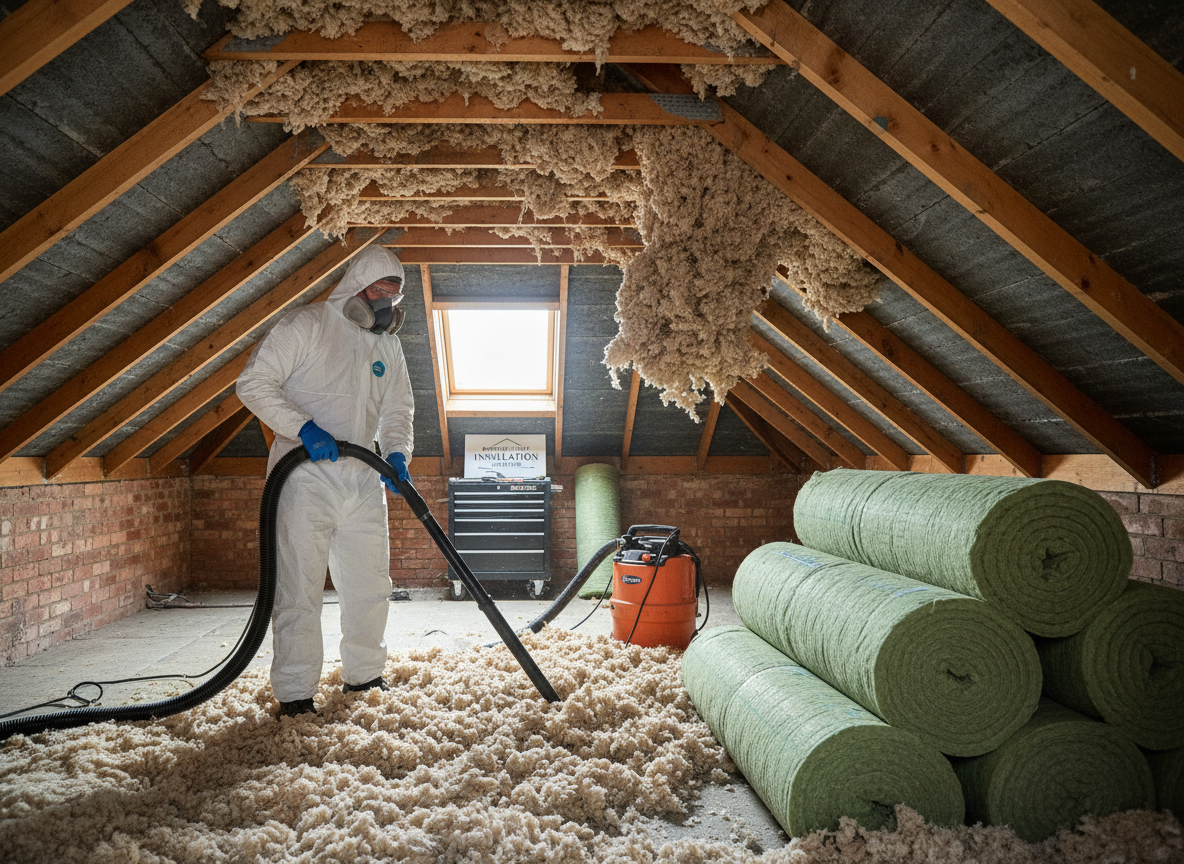
Barnstaple properties, particularly Victorian and Edwardian terraces around the town centre and Ladywell, often feature pitched roofs with original timbers that trap moisture when spray foam was added later. Devon's frequent rainfall and mild winters create condensation issues in these lofts, so removal must avoid chemical solvents that could damage historic lath and plaster or leach into surrounding soil near the Taw. Mechanical methods combined with biodegradable release agents allow clean separation without residue that might encourage mould regrowth once the roof is ventilated again.
Edge cases in the Barnstaple area include foam applied over existing mineral wool in 1960s bungalows on the outskirts, where layers have bonded to wiring and pipework. Extraction requires isolating electrics first and working around limited loft access common in narrow terraced houses. Proper bagging and licensed disposal prevents foam particles from entering local watercourses, which is critical given the area's proximity to sensitive river environments and the need to comply with standard UK waste regulations for construction materials.
Homeowners sometimes overlook how spray foam restricts natural airflow in stone-built cottages common around Barnstaple, leading to timber decay if not fully removed. The process includes checking for hidden voids above ceilings and ensuring all material is extracted before any new insulation is considered. This approach preserves the breathability of traditional builds while addressing the specific damp patterns caused by coastal humidity and heavy seasonal rain.
Technician insight
In Barnstaple, the thing that catches most people out with environmentally friendly insulation removal is the high humidity from the River Taw, which softens foam unevenly in properties built before 1950 around the town centre, requiring extra care during extraction to avoid residue.
Foam Removal in a Central Barnstaple Terrace
Problem: Condensation and musty smells reported in a pre-war terraced home near the town centre. We found: spray foam bonded tightly to rafters with trapped moisture from Devon's wet winters. What we did: applied targeted biodegradable agents followed by careful mechanical scraping and full waste removal. Outcome: restored roof ventilation and eliminated the damp source without affecting original timbers.
How it works
- 1
Initial Assessment
Inspect loft spaces in the Barnstaple property to identify foam depth, bonding to timbers, and any moisture damage from local weather patterns.
- 2
Site Preparation
Protect floors, electrics and access routes while setting up containment to manage dust in confined older properties.
- 3
Eco-Friendly Extraction
Apply biodegradable agents and mechanical removal to separate foam without harsh chemicals, working around typical Barnstaple roof structures.
- 4
Waste Handling and Cleanup
Bag all material for licensed disposal, then ventilate and inspect the space to confirm no residue remains in the humid Devon climate.
Pricing
Upfront quotes after inspection, with costs driven by loft volume, access difficulty and foam thickness in Barnstaple homes.