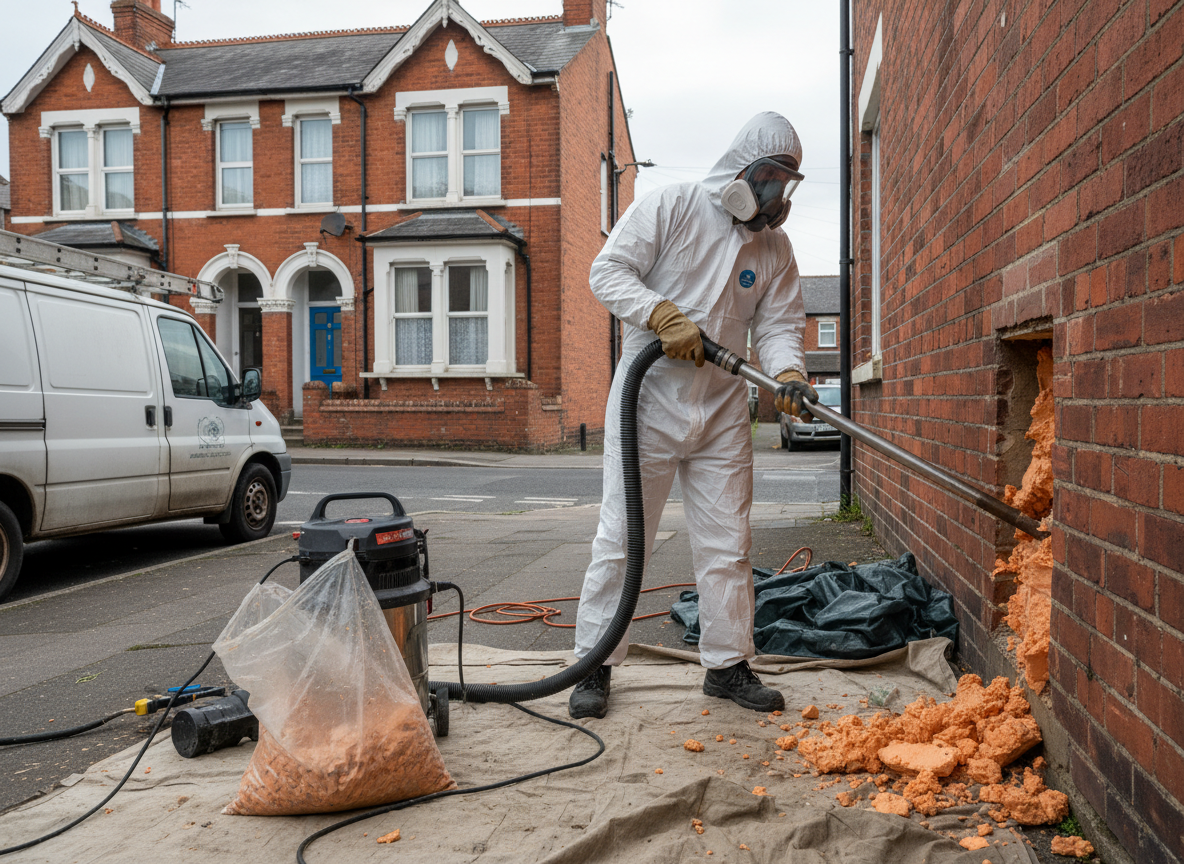
Cavity wall spray foam installed in the 1990s and early 2000s often degrades in Barnstaple’s damp Devon climate where frequent Atlantic rain drives moisture into walls. Older terraces around Pilton and Newport commonly have irregular stone or brick cavities that trap foam against timber lintels, creating hidden rot that only appears once the foam is disturbed. Removal requires careful mechanical extraction followed by cavity cleaning to avoid pushing residue into ventilation paths or down into ground-floor voids.
Barnstaple properties built before 1980 frequently feature narrow or stepped cavities that standard injection equipment cannot reach evenly, leaving pockets of foam that continue to hold water against the inner leaf. During removal the technician must monitor for bridging at floor levels and around window reveals where foam was often over-injected to meet older insulation standards. Wet weather common from October through March can turn loose foam into a slurry that requires additional vacuum extraction and drying time before any new insulation is considered.
Homeowners in the EX31 postcode sometimes discover foam has migrated into electrical chases or around soil pipes during removal, requiring coordination with local electricians before the job can finish. The process also exposes whether the original cavity was clear of mortar droppings, a frequent issue in Barnstaple’s hilly streets where builders used the cavities to level uneven ground floors.
Seasonal Considerations
Barnstaple’s winter rainfall often saturates cavity debris, so extraction work booked between November and February usually includes extra drying equipment and may take an additional day compared with summer jobs. Properties near the Taw estuary can also see higher salt content in the foam, which affects disposal classification and requires bagging as non-hazardous construction waste.
Technician insight
In Barnstaple, the thing that catches most people out with Cavity wall spray foam removal is the irregular cavities in pre-1920 stone terraces around Pilton where mortar droppings and the area’s frequent heavy rain turn the foam into a soggy mass that clings to the inner leaf and takes far longer to clear than the same job on a 1970s brick semi in Newport.
Pilton Terrace Extraction
Foam in a 1900s stone terrace had absorbed winter rain and started to push damp through the inner walls. Inspection showed foam packed against timber lintels and electrical cables. We extracted the material over two days, cleaned the cavity and allowed extra drying time before repointing, leaving the walls dry and ready for the owner’s planned re-plastering.
How it works
- 1
Initial Cavity Inspection
Borescope survey of external walls to map foam depth and locate any bridging or electrical runs before extraction begins.
- 2
Access Point Creation
Small holes drilled at regular centres along mortar joints in Barnstaple brickwork to allow insertion of extraction tools without damaging facing brick.
- 3
Mechanical Foam Extraction
Specialist vacuum and rotary tools used to pull foam from the cavity while monitoring for debris falling into lower voids or vents.
- 4
Cavity Cleaning and Drying
Remaining residue removed and walls left to dry, with extra time allowed during wet Devon months before any follow-on work.
- 5
Final Check and Reinstatement
Cavity inspected again and access holes repointed to match original mortar colour on properties in Ladywell and surrounding streets.
Pricing
Upfront quotes provided after on-site inspection; price depends on cavity depth, access and weather-related drying needs.