2026-10-22 ·
Safer Insulation Options After Removing Spray Foam In Barnstaple
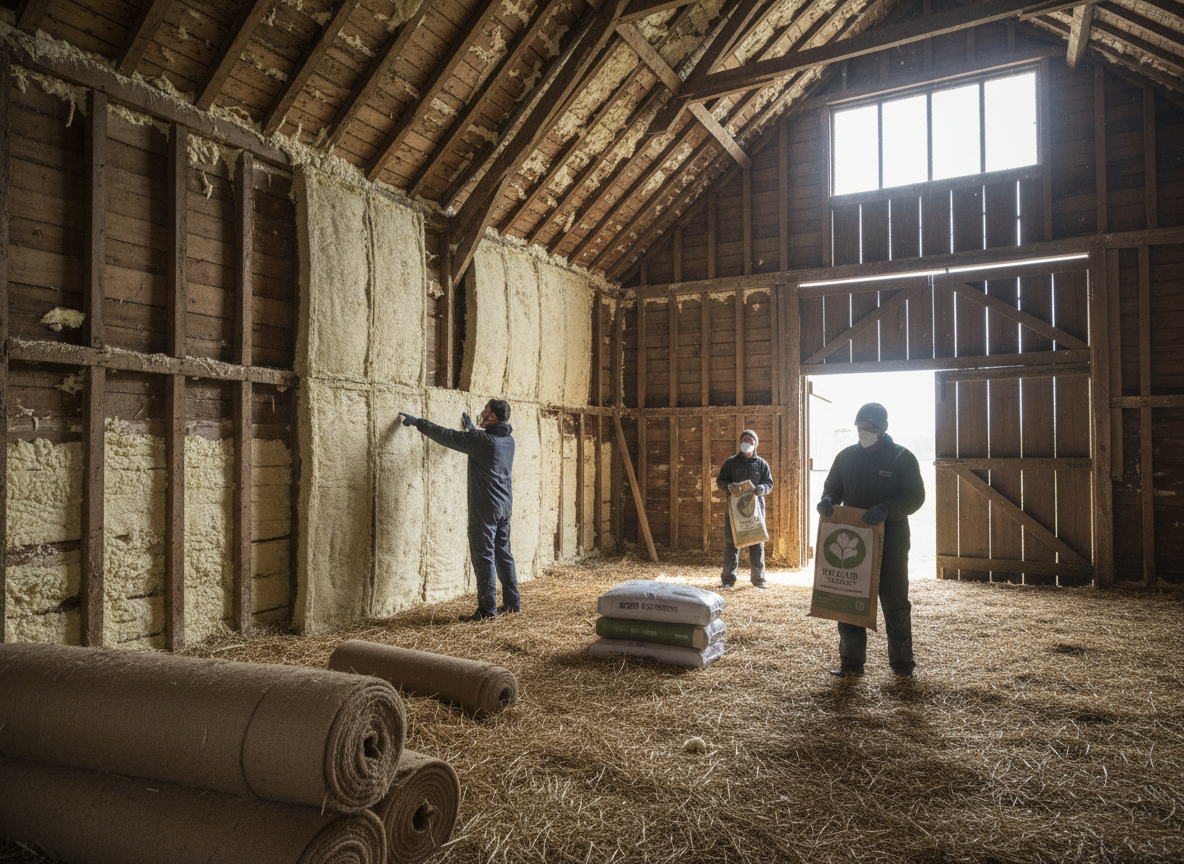
After removing spray foam, Barnstaple properties benefit most from mineral wool or wood fibre boards because these materials allow moisture vapour to pass through walls and lofts rather than trapping it against rafters. Coastal humidity in the EX31 postcode accelerates timber decay when non-breathable foam remains, so switching to vapour-open systems reduces rot risk in the area's many pre-1919 terraces and semi-detached houses.
Local Housing Stock and Moisture Risks
Barnstaple terraces built between 1880 and 1930 typically feature solid stone or brick walls with narrow roof voids. These constructions sit close to the Taw estuary, where salt-laden air raises relative humidity above 80 percent for weeks each winter. Spray foam previously applied to rafters or between joists prevented drying, leading to hidden condensation on sarking boards. Removing the foam restores airflow, yet new insulation must still manage driving rain on south-west facing roofs and rising damp from clay subsoils common around Ladywell and Pilton. Mineral wool batts or wood fibre boards placed between rafters allow the structure to dry outward while maintaining thermal performance. Homeowners in South Molton Road or Bear Street notice fewer black mould spots once vapour-open layers replace closed-cell foam. The same principle applies to cavity walls in 1950s estates near Roundswell, where partial-fill mineral wool maintains the required 50 mm residual cavity for drainage.
Breathable Materials That Perform in Devon Conditions
Wood fibre boards offer 0.038 W/mK conductivity and a vapour diffusion resistance factor around 5, letting moisture escape through the roof plane during Barnstaple's frequent 10-15 mm rainfall events. Sheep's wool batts provide similar breathability plus natural hygroscopic buffering that absorbs spikes in loft humidity after heavy Atlantic storms. Both materials tolerate the 5-8 degree temperature swings typical between Barnstaple and Ilfracombe without sagging. Cellulose loose-fill treated with borates suits older suspended timber floors in Pilton properties, settling into voids without creating cold bridges against damp joists. These choices avoid the closed-pore structure that previously caused mortgage valuation issues on Barnstaple streets. Each option maintains at least 300 mm depth in lofts to meet current U-value targets while preserving the drying capacity essential for coastal timber.
Practical Installation Steps for Barnstaple Properties
Begin with a full inspection of rafters and sarking to confirm no active rot remains after foam extraction. Install breathable roofing membrane if existing felt has perished, then fit 100 mm wood fibre boards between rafters followed by a 40 mm continuous layer across the underside to eliminate thermal bridging. Seal junctions with lime-based tapes rather than standard foil tape so the assembly stays vapour open. In lofts over 1970s bungalows near Braunton Road, blow cellulose to 350 mm depth while maintaining 50 mm ventilation gaps at eaves. For cavity walls in estates around Bickington, inject mineral wool fibres from the exterior after confirming weep holes remain clear. These steps take one to three days depending on property size and access, with work scheduled around the 24/7 availability based at Ladywell, Barnstaple EX31 1QS.
Ongoing Performance and Cost Factors
Breathable insulation lasts 40-60 years when kept dry, compared with the shorter service life of foam once coastal salts degrade the facing. Annual checks of eaves ventilation and ridge tiles prevent the moisture accumulation that previously shortened foam performance. Material costs range from 18-28 pounds per square metre installed for wood fibre systems, while mineral wool runs 12-20 pounds. These figures reflect current Devon supply chains and exclude scaffolding on two-storey terraces common in central Barnstaple. Properties within five kilometres of the estuary may need additional salt-resistant fixings, adding modest labour time. Readers can review current removal pricing and preparation advice in the linked guide on spray foam removal costs.
Next Steps After Removal
An on-site assessment identifies the best material for each Barnstaple home's construction and exposure. The process includes moisture meter readings on timber and checks for salt efflorescence on external walls. Once measurements are recorded, installers can recommend the exact thickness and fixing method that meets both thermal and breathability requirements. Further reading on how coastal air affects spray foam performance helps owners understand why the change matters in this specific region.